UDL Applied to Practice

Q1: How does a thoughtful system of planning for UDL implementation reduce barriers and build learner expertise? What are some examples of these steps that you took away from Dr. Croasdaile’s presentation? (Think about how these might be considered in your initial phases of your UDL plan.)

Before UDL can be utilized, there are a series of steps that must be taken to ensure success. One of these includes planning. One important component in this step is conducting a needs assessment. “By having a comprehensive needs assessment, we know what the most pressing issues are and by having a community-based vision, we know what things the community cares about and is excited and willing to provide support” (Novack & Rodriguez, 2016). Before we can really dive in and start implementation of UDL, it’s important to understand the unique needs of the school/establishment so we can set them up for success early on.

It’s also important to keep the UDL Guidelines in mind throughout every step of the process, particularly “guide appropriate goal setting” under Executive Functioning in Action and Expression (CAST). For example, “The UDL Guidelines remind us that in order to build a district’s executive function, we must guide appropriate goal-setting, support strategy development, manage information and resources, and enhance capacity to monitor progress” (Novack & Rodriguez, 2016). Croasdaile echos the importance of goal setting in executive functioning during her talk. She puts emphasis on the importance of scaffolding self regulation in order to achieve successful executive functioning. She states,“We have to be able to scaffold self regulation because they lose their expectations and beliefs that optimize motivation. They lose their ability to self accept and reflect” (Croasdaile, 2019).

Another cornerstone in reducing barriers and building learner expertise comes from effectively utilizing multiple means of representation. Thanks to technological advances, creating opportunities for multiple means of representation has never been easier. In fact, technology is something that should be considered early on in the planning phase. “A technology plan is also a critical aspect of a district’s larger UDL strategy. Managing technology requires a strategy of it’s own, which aligns with the district’s vision and larger strategy” (Novack & Rodriguez, 2016). Croasdaile reflected on an experience she recently had in a science classroom. The students were expected to know the scale of planets to everyday objects for the state test. In the past, teachers had to bring in physical objects such as peppercorns, because students didn’t know what they were. Now, students can easily use Google to identify a peppercorn. They can even dig deeper and learn more information about the peppercorn or whatever object they’re looking at.

Q2: What are some strategies that you extracted from this week’s readings and presentations that you are considering for your UDL Systems Change Plan- specifically for your beginning readiness and planning phase?

First and foremost, I plan on conducting a needs assessment, like mentioned above. Before I start planning, I want to get a feel for what is important to the people I work with and where they feel there are the most deficits that need to be addressed. This will give me the initial blueprint I need to move forward with the planning phase of my UDL action plan.

Second, I’m considering for my UDL Systems Change Plan is incorporating Professional Development. I think this is especially crucial in my work environment because while we work with transition age youth, I’m the only one on our team that has any kind of background in education. Therefore, my co-workers have probably never even heard of Universal Design for Learning. I work in a Department of Economic Development govenment position, so there’s not a significant amount of emphasis put on educational practices.“Investing in these professionals ensures that all members of the teaching and learning team have a shared understanding of best practices, a commitment to the district strategy, and the ability to implement the evidence-based strategies that will result in the most effective student outcomes(Novack&Rodriguez,2016) . One of the most important things to focus on when planning this professional development will be to recruit interest. “In order to build engagement, it’s important to understand what PD is relevant and meaningful for your staff”(Novack & Rodriguez, 2016).

Third, I really liked some of the resources that Croasdaile shared in the presentation in relation to goal-setting. For example, the GROOWS strategy looks like something that would be great for utilizing with our youth during the summer jobs program. I think it would also be appealing to the other staff on my team.

Image retrieved from Croasdaile (2019)

References:

Croasdaile, S. (2019). UDL applied to practice-a focus on instruction. Retrieved from https://zoom.us/recording/share/WMMQeKnertA_j3lvl7zxmF8TWtj0WOOaASjsuXsSaRSwIumekTziMw

CAST (2018). UDL: The UDL Guidelines. Wakefield, MA.

Novak, Katie, and Kristan Rodriguez. Universally Designed Leadership: Applying UDL to Systems and Schools. Cast Professional Publishing, 2016.
UDL in Transition and Postsecondary Education

Question 1:

Explore the UDL on Campus website and choose one institution that is currently applying UDL in their setting (not GW). Discuss what you ascertain as strengths of this program with regard to their consideration of UDL. What resources are working? What barriers may still exist? 

UDL is becoming more prevalent in colleges across the country. I chose to focus on Towson University’s application of UDL for a few reasons. First, I almost went to Towson University for my undergraduate studies. Second, it’s close to where I live. Finally, I think Towson is doing an outstanding job of implementing UDL to enrich the experiences of students and faculty alike.

Image retrieved from Towson.edu

The UDL Professional Development Network is comprised of 85 faculty and staff who participate in face-to-face and online professional development, professional learning opportunities, and tools and research sharing. In addition, faculty coaches with more extensive UDL training provide peer support. In a video interview, Claire Holmes, a Research and Instruction Librarian stated, “We believe already that it’s super important to engage students immediately and we know that there’s a learner variability. We don’t know what it is. We don’t know much about our students usually, that we’re working with in any given class, but we know it’s there, so having the tools of UDL principles and guidelines allows us to kind of capitalize on what we already do when we’re teaching information literacy, but hopefully expand the choices for students and allow us to change up the various ways that we teach” (2014). Some of the ways Towson University utilizes UDL in courses is revised syllabi and final projects. There’s also learning assessments and digital learning projects.

Towson also offers interactive services such as academic advising, disability support services, and programs for adults with Autism. This allows Towson to meet the needs of their students learning variability.

I think the fact that Towson has such a strong community of faculty and staff members working together to effectively implement UDL makes for a huge strength. This allows them a space for collaboration, as well as the opportunity to learn from UDL coaches.

Question 2: Consider the points addressed in the talk by Dr. Kester, Dr. Smith, and Ms. Kallas. What frameworks appeared to be important for promoting UDL systems change? What were some opportunities that they leveraged to promote success?

Because UDL is still relatively new to the field, it’s taken a lot of work to create systems change. Dr. Kester, Dr. Smith, and Courtney Kallas discuss some themes in promoting this UDL systems change. One of the first topics discussed by Dr. Kester is identifying barriers by collecting data. Then, it’s important to bring a diverse perspective to reinforce a growth mindset, and creating an environment for change among a team.

When looking at creating conditions for systems change, Dr. Kester identified four important strategies.

  • Appreciative Inquiry
  • Authentic Stakeholder Engagement
  • Liberating Structures to Increase Engagement
  • Collective Impact

Appreciative Inquiry is a theory that shares some of the same principles as person centered thinking. It’s about looking at what you do in the field and expanding on Discovery or “the best of what is”. Next, is the dream step or envisioning “what could be”. Third, is designing or co-constructing “what should be”. Finally, there is destiny or sustaining “what will be”. This model allows for high level of enagagement when building a foundation for systems change.

Another strategy addressed was Authentic Stakeholder Engagement. Leading by Convening is a blueprint for authentic engagement among stakeholders. This came from the IDEA Partnership. It was federally funded to address educational issues. This allows for stakeholders to feel more comfortable through the collaboration process and be more willing to “buy-in”.

Then, Dr. Kester discussed Liberating Structures to Increase Engagement. This shifts the collaboration from just presenting a focus question to presenting multiple means of structuring engaging activities. She shared an example of creating having participants sit in a U shape and start the conversation around the given topic at the front. Others could circulate to the front to engage in the conversation and could circulate to the back when they were finished. Creating more engagement makes for more meaningful collaboration, which will hopefully lead to more effective systems change.

Courtney Kallas discussed the importance of Collective Impact. Kallas expressed how she noted that there was a lot of success with work-based learning experiences for youth with disabilities in terms of increased graduation rates. Partnerships were created in places such as The University of Colorado at Denver where students experience UDL in simulation during a medical science class. This allows students to decide if this is a career path they truly want to explore. Other partnerships Kallas discussed were with the Denver Aquarium, Career and Tech education, garden-to-cafeteria in Denver Public Schools. Kallas put emphasis on finding congruence for all students through student centered work based learning experiences.

References

Kester, J.  (n.d.) Systems Change. [PDF File]. Retrieved from https://blackboard.gwu.edu/bbcswebdav/pid-9206594-dt-content-rid-60587276_2/courses/45957_201901/Systems%20Change.pdf

Smith, F., Kester, J., and Kallas, C. (n.d.). UDL in Transition, Career Assessment, & Career-Technical Education. [Video file]. Retrieved from https://blackboard.gwu.edu/webapps/blackboard/content/listContent.jsp?course_id=_310811_1&content_id=_9206923_1

Universal Design for Learning. (n.d.). Retrieved from https://www.towson.edu/provost/initiatives/leadership/teaching/academicinnovation/development/udl.html

Systems Change and UDL

Question 1:

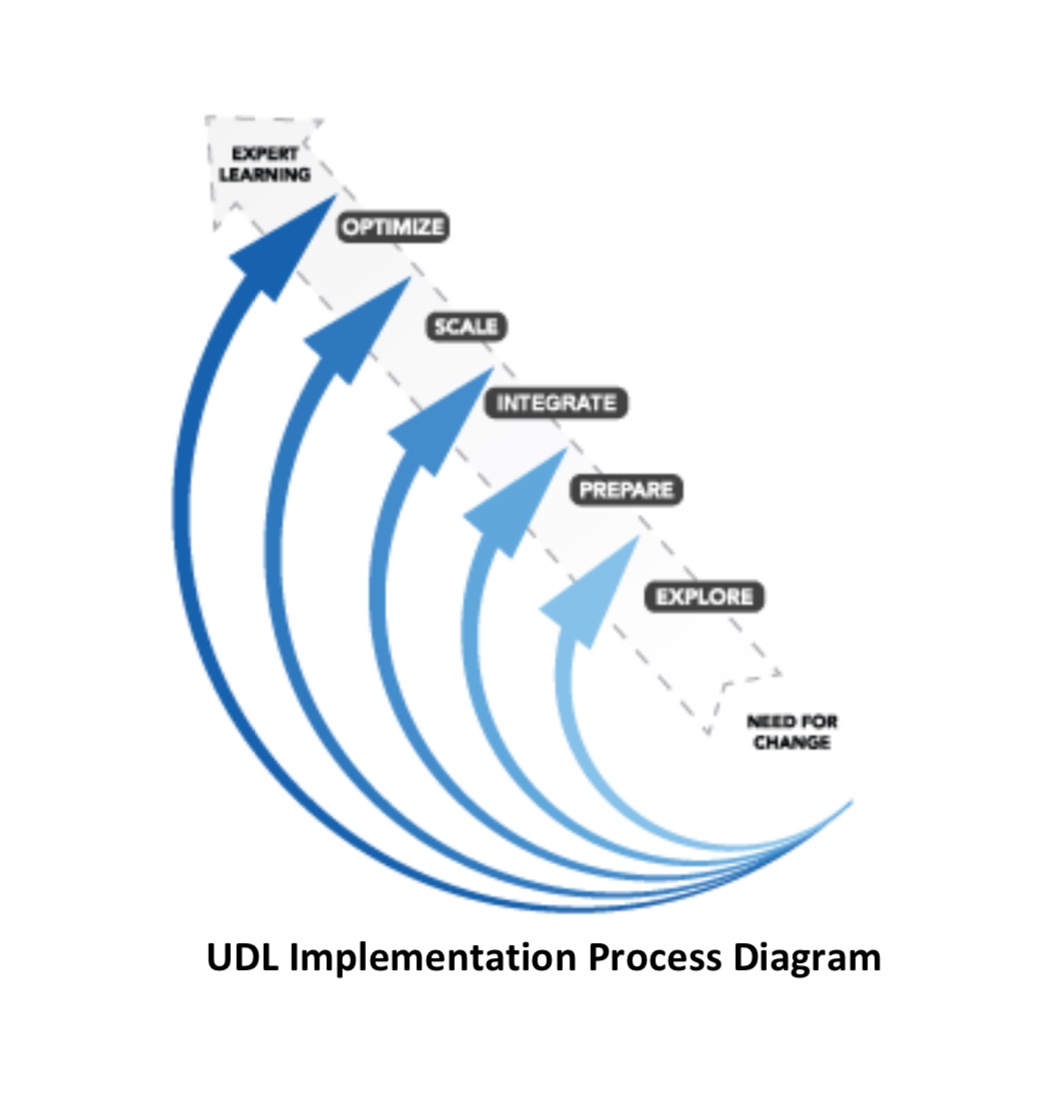
Whenever and wherever UDL is implemented, it’s important to consider the five phases of UDL implementation. They are adapted from Fixsen, Naoom, Blasé, Friedman, and Wallace (2005).

  1. Explore
  2. Prepare
  3. Integrate
  4. Scale
  5. Optimize
Retrieved from National Center on Universal Design for Learning

One place where this was implemented was the Cecil County School Disctrict in Maryland. Cecil County has been known for there inclusiveness and collaborative efforts, which I think made them so successful in effectively implementing UDL. Another strength that Cecil County had in implementing UDL is that first, they have been exploring UDL since 2010. Second, after district leaders identified two middle schools with 11 cross disiciplinary educators and administrators, each school formed a UDL PLC that met with the UDL facilitator on a weekly basis. This shows that the county was serious in continuing to have open communication and collaboration efforts to ensure they were implementing UDL correctly.

Cecil County Public Schools did face some challenges amidst the UDL implementation . During that time, there were a lot of initiatives being pushed through the district all at once including the Content Literacy Continuum RTI Model (CLC) and the Literacy Design Collaborative (LDC). In addition, the disctrict had just invested in a wireless network and a student to computer ratio of 3:1. The solution to the initiative overload problem was to focus on literacy instruction in the schools and utilize UDL as a curriculum design framework. According to Justin Zimmerman, a principal at Perryville Middle School, said “The key component of the district’s philosophy is meeting the needs of all the learners in our schools, so using the principles and guidelines of UDL seemed like a no-brainer. We felt that a natural solution to having so many mandates and initiatives was to use UDL as an umbrella to support all upcoming curriculum writing and direct instructional change.”

One of the key players in the UDL initiative in Cecil County Public Schools was Michael Hodnicki, an Instructional Coordinator for Professional Development. He made sure that the idea of variability was emphasized throughout the implementation of UDL. He stated, “It is more than providing flexible means of representation, action and engagement, it must come from a deep respect for the variability of the learners. What you do does not change until you change how you believe.” This recognition of learner variabiltiy is key to ensuring success with implementing UDL.

Question 2:

“To ensure that our vision and our plan for UDL is truly great, we must create a framework for information-based decision making. We must also keep instructional improvement front and center. If we do so, UDL will be a guidepost in the development of the three competencies of effective systems: understanding the work (the “what”), knowing how to do the work (the “how”), and creating a culture for continual improvement, sustained engagement, and self-reflection (the “why”)” (Novak & Rodriguez, 2016).

In terms of my current employment, I am between jobs at the moment. My spring course I taught at Frederick Community College has ended and the summer semester doesn’t start for another month. However, in a couple of weeks, I will begin employment at Frederick County Workforce Services as their Summer Jobs Program Coordinator. I worked there last year as a summer jobs counselor, but I’ve been promoted to the program coordinator role this year. Therefore, I’m going to focus on Frederick County Workforce Services for the purpose of this post.

Retrieved from frederickworks.com

“The Frederick County Summer Jobs Program provides valuable and meaningful summer employment opportunities for Frederick County residents between the ages of 14-21 and who possess a barrier to employment, such as a disability or lower income status” (Frederickworks.com).

Novak and Rodriguez identify one of the first steps in exploring how to apply UDL to a school or organization is to ask, “ Do your district’s articulated mission and vision statements encompass the needs and hopes of all students, regardless of their variability” (Novack & Rodriguez, 2016). I believe Frederick County Workforce Services holds true to their statement and meet the needs of the youth they serve, no matter their disability or socioeconomic status. The goal is always to provide the most meaningful summer employment experience for the youth as possible. In a lot of ways, Frederick County Workforce Services already implements the UDL framework.

For example, Engagement is an important part of the program from the beginning. Novack and Rodriguez (2016) state, “When stakeholders are engaged with us, they are interested in what we have to share, have a purpose for learning, are motivated to learn and participate, and have self regulation strategies so they can be reflective throughout the process.”Youth are given an informal assessment to determine their interests and career goals. It’s important that the youth be matched to a job site that aligns with their interests and career goals so the youth will stay motivated and hopefully, have the most meaningful experience possible. We also increase engagement in our youth by letting them know they will be getting paid! I think for anyone, knowing they are working for a paycheck is enough to keep them engaged with a job. For a lot of youth, this is the first paying job they will have, so they are motivated to start work.

“As we provide multiple means of representation and expression, we must adjust demands and the levels of challenge and provide different levels of support, so everyone has the skills necessary to persist in the learning experience and become an integral part of our system” (Novack & Rodriguez, 2016).

In terms of representation, the first thing that comes to mind is the pre-employment workshop training we offer for our youth. Because this is a first job for a lot of the youth, we provide a workshop focusing on basic information and skills for employment such as interview skills, what to wear, attitude, and being on time. Because there is a lot of learner variability within our youth we serve, we make sure to provide the information in more than one format. For example, we have the PowerPoint presentation for the youth to watch. There is also the staff member who is orally explaining the information to the youth. Finally, the youth each have handout with important points to remember, as well as their own copy of the PowerPoint with space to take notes.

Finally, expression is integrated in the summer jobs program for the youth, the worksite employers, and the summer job counselors. Every two weeks, the worksite employers fill out a five question survey about each youth’s performance at work. This is given to the summer jobs counselor to evaluate if any job coaching needs to take place or if we need to give a youth praise for doing an outstanding job! In addition, the youth receive weekly check-ins from their counselors to see how things are going. Youth have the option of communicating with their counselors in-person verbally, email, or text message. The summer jobs counselors have meetings every two weeks to talk about their cases, trouble shoot, and just discuss what they’ve learned. I appreciate that every person involved in the program is given options for action and expression.

References

Frederick County Workforce Services. (n.d.). Retrieved from http://www.frederickworks.com/

National Center on Universal for Design (n.d). UDL Implementation: A Tale of Four Districts. Retrieved from https://blackboard.gwu.edu/bbcswebdav/pid-9206584-dt-content-rid-62275349_2/courses/45957_201901/FourCaseStories3.13.13_mo.pdf

Novak, K., & Rodriguez, K. (2016). Universally Designed Leadership: Applying UDL to Systems and Schools. Wakefield, MA: Cast Professional Publishing.

UDL Lesson Analysis

I selected the lesson, “Learning About Scientific Inquiry” from the CAST featured lessons on the UDL Exchange. I selected this lesson because the subject matter is bit out of my comfort zone, and I wanted to challenge myself. I typically gravitate more towards English and social studies while I avoid math and science. I usually don’t even accept substitute teaching jobs in math or science classrooms because I’m not as comfortable with the topic.

“The purpose of this lesson is designed to support understanding of scientific inquiry. Students experience first-hand each step in the inquiry process and how the steps systematically build toward understanding. After an anticipatory set, students use a graphic organizer to document the steps in the scientific inquiry process using a case example from a television show” (CAST, 2012).

The first criterion of Ralabate’s lesson analysis is “The lesson goal is flexible, clearly defined, and SMART.”(Ralabate,2016). The goal in the CAST featured lesson, “Learning About Scientific Inquiry”, is both flexible and clearly defined. The instructional goal states, “Students will gain an understanding of the process of scientific inquiry.” (CAST, 2012). This is a flexible goal because there are multiple ways students can gain an understanding of the process of scientific inquiry. There isn’t a specified means of meeting the goal, which allows students to use the method that works best for them.

The second criterion is “The lesson plan considers learner variability, including learning gaps and variables.” (Ralabate, 2016). The instructor is explicit in stating how learning variability will be considered by addressing each of the three principles of UDL: Engagement, Representation, and Strategies. For example, when addressing strategies, the instructor states “As I circulate the room, I will make clear that students can choose to take notes in linear, outline or free form, if this is helpful. I will also provide the graphic organizer both in printed form and on the computer, so students can choose the format.” (CAST, 2012). By providing students with multiple means of taking notes and viewing the graphic organizer, learner variability is being considered.

The third criterion is “The lesson includes meaningful informative assessments of learning that is aligned to the lesson goal.” (Ralabate, 2016). The instructor had several ideas for formative assessments. One is to circulate the room while students chart the steps of the inquiry process, and note what concepts students are grasping and what concepts they’re struggling. The instructor is mindful of learner variability when noting, “Be aware that skills at charting could potentially interfere with each student’s ability to demonstrate progress towards the specific learning goal of this lesson, so provide a graphic organizer as a support and to allow them to choose whether to complete this organizer on paper or on the computer.” (CAST, 2012). The instructor also mentions another opporutnity for a formative assessment in a “Think, Pair, Share” activity, which also facilitates collaborative learning.

The fourth criterion from Ralabate is “The lesson addresses UDL Guidelines by using appropriate, engaging, meaningful, and goal-oriented teaching methods, materials, and media.

A. The lesson engages learners

B. The learners are able to access and understand content.

C. The lesson provides opportunities for learners to apply content and show what they know and are able to do.” (Ralabate, 2016).

The instructor addresses the engagement of learners by using a televison show as a main example in his lesson. He also allows the students to select one of two of the tv shows (each on a separate topic) to focus on. “I allow choice about topics because the topic of inquiry is not critical to the lesson goal; as long as the example allows students to explore the question, it will work for my instructional purposes.” (CAST, 2012). The instructor makes sure the students have access to and understand the content by allowing them access to a graphic organizer. This can be viewed on paper or on the computer and the studdents can choose. The students are also able to increase understanding through a “Think, Pair, Share” activity with peers. Finally, the students can apply content and show what they know by filling out their own graphic organizer as it applies to the particular TV show they choose to watch. Also, during the “Think, Pair, Share” activity, students have the opportunity to share what they know and answer peers’ questions.

The final criterion is “The lesson plan includes assessment for learning, offering an opportunity to collect relevant data about learner progress for teacher and student reflection.” (Ralabate, 2016). This is similar to the second criteria in that the instructor will be able to circulate and assess students’ progress on their graphic organizers. In addition, the “Think, Pair, Share” activity is a way for students to share what they know and reflect on their learning.

References

CAST. (2012). UDL Exchange. Lesson Support: Learning About Scientific Inquiry. Retrieved from http://udlexchange.cast.org/lesson/8326

Ralabate, P.K. (2016). Putting it together: check-In: lesson analysis. In Ralabate, P.K (ed), Your UDL lesson planner: the step-by-step guide for teaching all learners (pp 139). Baltimore, Maryland. Paul H. Brookes Publishing.


Expert Learning and Variability: Embracing What Makes Us Different

Image retrieved from sevenly.org

To me, being an expert learner is constantly yearning to gain more knowledge, and knowing yourself well enough to understand how to most efficiently obtain that knowledge. “Everyone can become an expert learner because everyone can develop the motivation, the reflection, the self efficiency, the self regulation, the self determination, the executive functioning, the comprehension, and the situational awareness that help to make experts what they are” (Meyer, Rose, & Gordon, 2014). In regard to education, expert learning and growth should be the goal for students, teachers, and administrators alike.

One of the keys to becoming an expert learner is understanding the significance of variability. “Variability is the dynamic and everchanging mix of strengths and challenges that make up each learner” (Meyer, Rose, & Gordon, 2014). Variability and Expert Learning are concepts that go hand in hand, because when learners are able to understand their strengths, they’re able to unlock their greatest potential in learning. Someone who encompasses this is Feliks Zemdegs, a Rubik’s cube whiz. Feliks enthusiasm for the Rubik’s cube led him to learn how to rapidly solve the puzzle through YouTube videos and self-practice. Overtime, Feliks was able to earn the title of world champion. “He compares his own learning techniques with those of others, and he is always on the lookout for new approaches that might suit him. But he is also clear about those that don’t work for him” (Meyer, Rose, & Gordon, 2014). With this in mind, it’s important to remember that everyone has their own unique way of learning, while still working toward a common goal.

Another quality that all expert learners share is a growth mindset. Carol Dweck describes this as “seeing that they can develop their qualities and their “smarts” through effort and dedication” (Meyer, Rose, & Gordon, 2014). Having a growth mindset also enables learners to accept feedback and apply it to their work. In my opinion, this can be one of the most difficult, but most valuable parts of learning. My eyes were really opened to what having growth mindset really feels like when I was working as an Applied Behavior Analysis (ABA) Behavior Technician a couple of years ago. My boss would have weekly meetings with us, where she would give us feedback from her observations of our sessions. At first, I was really hard on myself when she would give me criticism, even though it was constructive. Overtime, I realized she saw potential in me and was giving me feedback so I could become a better therapist and in turn, provide better quality services to my clients. After about five months with the company, my boss promoted me to Lead Behavior Technician. I know that being receptive to her feedback and applying her criticism to my work is what made me better, and brought out a newfound confidence in my professional and personal life. Although I know I’m still a sensitive soul, I do my best to apply a growth mindset to all things I do. As humans, we never stop learning and will never be an “expert” at anything. There is always more to learn.

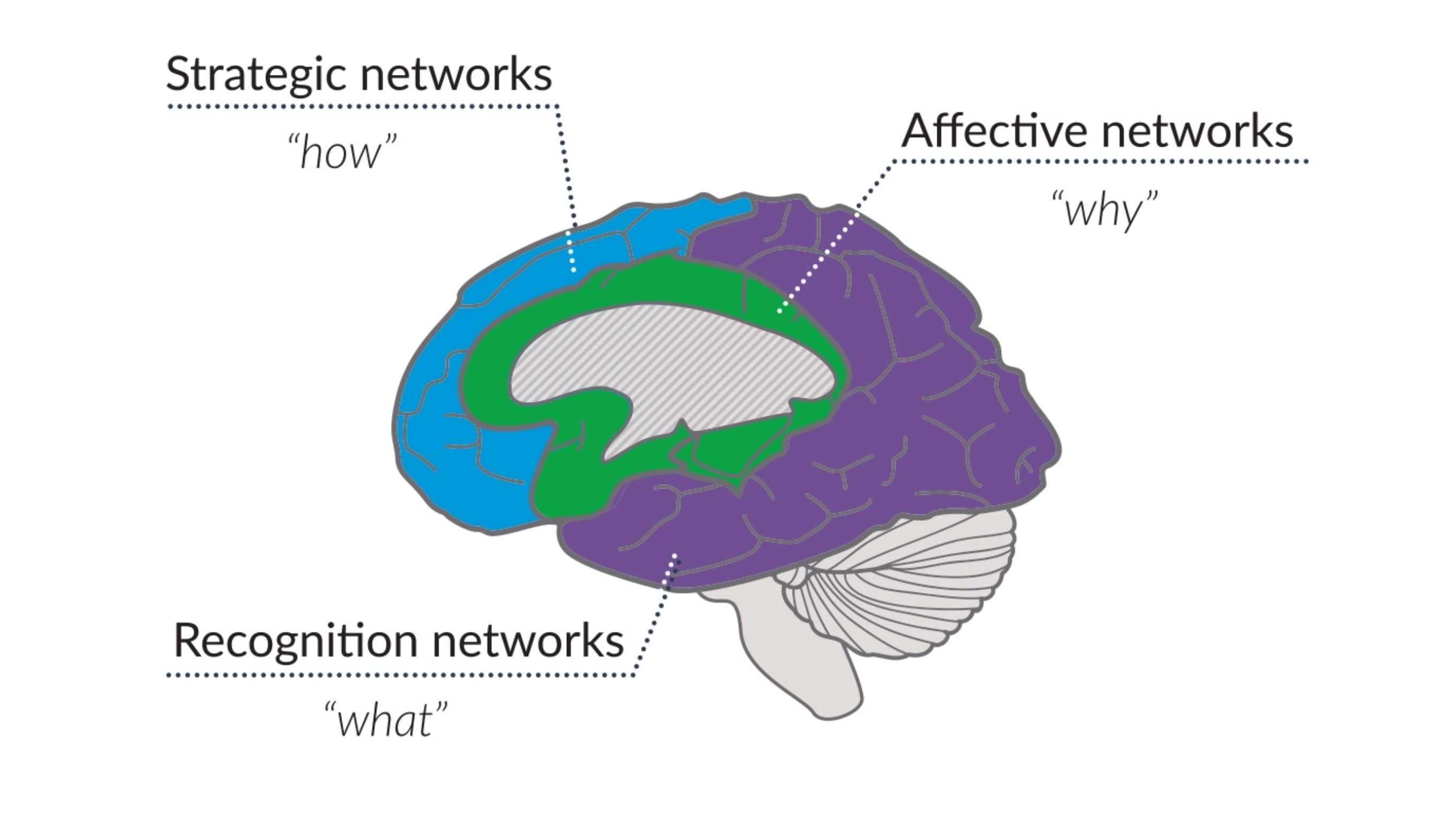
Image retrieved from cast.org

Learner variability has been heavy on my mind as I’m approaching the first day of my new job as an instructor of self advocacy and self determination at the local community college. I’m going into my first day with no prior knowledge of my students’ abilities, limitations, or learning styles. Therefore, I’m being mindful of the three primary classes of networks for learning to ensure I’m reaching all students, no matter their ability or learning style. Affective networks are linked to priorities, motivation, and engagement. Recognition networks are linked to sensing and perceiving information and converting it into useful knowledge. Strategic networks are linked to planning, organizing, and initiating purposeful actions. “To learn we need to care about what we are learning and want to learn it; we need to take in and build knowledge; and we need to develop the skill and fluency in our actions” (Meyer, Rose, & Gordon, 2014).

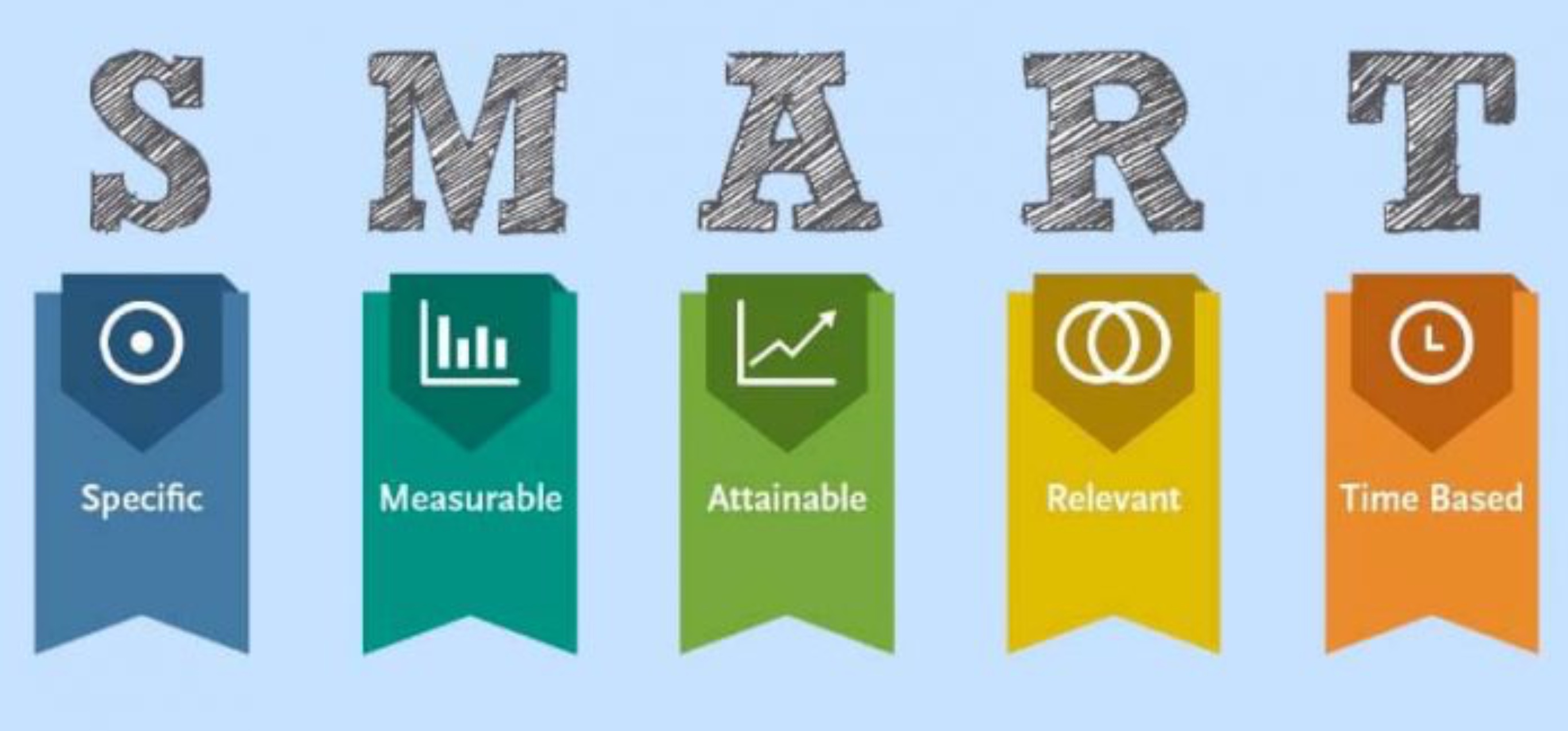
Image retrieved from toolshero.com

One lesson I’m planning on teaching at the beginning of my course is goal planning. My thought process behind creating this lesson is reflected in the three primary classes of networks for learning. For example, I’m initially going to have students write, verbalize, and/or draw (depending on ability) a goal for the course and for their personal lives. By allowing the students to identify goals that are meaningful for them, I’m appealing to the affective networks of the brain. “A simple affirmation of learners’ positive sense of self, of their value as individuals, and of the importance of their membership in a cultural tradition has repeatedly been shown to have positive effects on learning and on performance”, (Meyer, Rose, & Gordon, 2014) . Next, I plan on presenting students with the S.M.A.R.T goals approach. “S” stands for specific, or what exactly is going to be achieved. “M” stands for measurable, or how the student will know the goal is achieved. “A” stands for attainable desire, and keeping the goal realistic. “R” stands for relevance, or why the goal is important. Finally, “T” stands for time bound, or when the goal will be completed. This part of the lesson applies to the recognition network, because the students are taking the new information and relating it to their own specific goal. Last, the students will utilize their strategic networks by writing or verbally stating their goal in the context and format of the S.M.A.R.T goals approach. This allows students to practice executive functioning skills, which “are specialized for setting broad or longer-term goals for action, making plans for effective strategies, monitoring progress towards goals, and making course corrections as needed” (Meyer, Rose, & Gordon, 2014). I plan on tying the entire lesson together by having students create a vision board, which will be a visual representation of their goal in the form of a collage. The hope is that students will put their completed vision boards somewhere they will see them every day, so they are reminded of their goal, and the steps to achieve it.

In closing, this week has allowed me to reflect on my past and future experiences as they apply to expert learning and variability. While I’m a little nervous going into this new position, I’m confident my class will be a success if I consistently anchor the teachings to the primary classes of learning and principles of variability. In addition, I hope that the experience I have, along with the feedback from my students, will allow me to enrich my own learning skills.

References

Lawlor, K. B., & Hornyak, M. J. (2012). SMART Goals: How the Application of SMART Goals Can Contribute to Achievement of Student Learning Outcomes. Developments in Business Simulation and Experiential Learning,39.

Rose, D. H., Meyer, A., & Gordon, D. (2014). Universal Design for Learning – Theory and Practice.

UDL in a Montessori School

Prior to entering this graduate program, I had very little knowledge of Univesal Design for Learning. As I’ve learned more about this practice and have gained more experience in the school system, I definitely see the benefits. “UDL is a framework for teaching and learning that includes proactive planning of curricula (goals, assessments, methods, and materials) and takes into account the variability of all learners” (UDL Intersections, 2014).

I currently work as a substitute teacher, so my work setting changes from day to day. For the most part, I’ve been in classrooms where there is no trace of UDL, and the structure is strictly lecture and note taking. However, I’ve also been in some classrooms where there is an abundance of UDL implementation, with a variety of learning and teaching practices. One school where I find myself taking jobs more frequently is Monocacy Montessori School in Frederick, Maryland. I’ve substituted at the school in special education, physical education, social studies and language arts. I completely fell in love with the Montessori method as soon as I stepped into my first classroom. The students are so much more engaged, cooperative, and they genuinely seem to enjoy learning. I see so many parallels with the Montessori method and Universal Design for Learning, which is why I think I saw so many students thriving.

Universal Design is evident as soon as you walk through the front door of the school. There is a ramp that leads to the main level instead of stairs. This allows students with physical disabilities to use the same entrance as their peers while still being accomodated. There are also two elevators in the school the students can use because the school is three stories. This is just one of many examples of Universal Design and Universal Design for Learning at Monocacy Montessori School.

While providing “push-in” support for a student receiving special education services, I observed 4th and 5th grade class’ math period. Unlike a lot of other schools I’ve subbed in, I saw students out of their seats working on a variety of different activities. Some students were playing math games with a partner, while others were using manipulatives to solve math problems. The student I was working with opted for a more traditional pencil and paper method. The thing that really impressed me was that all of the students were learning the same concept, but they got to choose how they learned it. This was exemplary of the Universal Design for Learning framework.“When we design learning environments proactively for variability, we anticipate and value the incredible strengths and diversity of our learners” (CAST, 2018).

While the terms Universal Design (UD) and Universal Design for Learning (UDL) are similar in meaning, there are some notable differences. “UD guides the development of products and built environments offering access to the greatest number of individuals from the outset without requiring costly or clumsy retrofitting” (UDL Intersections, 2014). In terms of architecture, some examples of UD include automatic doors, ramps, and elevators. In education, the focus is on making material accessible for everyone and decreasing the need for customized materials and accomodations. Meanwhile, Universal Design for Learning is based on research from the learning sciences and neuroscience. The goals of UDL are to offer flexible options to learners, present information in multiple ways, and provide multiple ways for students ot show what they’ve learned. This was encompassed in the math lesson I observed because students were given a multitude of choices for how they wanted to learn and practice the skill.

“When we design for variability using the UDL framework, clarifying the goals and integrating flexibility in engagement, representation, and action and expression, we acknowledge that learners do not learn in one linear pathway” (CAST, 2018). Montessori education echoes the principles of UDL. It is accepted that every student learns differently, and therefore, they should be allowed to choose why, what, and how they learn. Another example I observed of this was in a Montessori middle school social studies class. The students all had the same reading, but had the choice of reading a paper copy, reading a digital copy, or listening to an audio recording. The students then broke into groups engaged in collaborative discussions in a flexible seating environment. Finally, the students got to choose if they wanted to comprise a written report, PowerPoint, or oral presentation about what they had read. Allowing the students choices in how the received the material and how they exhibited their learning kept them more engaged throughout the class period. In addition, I noticed the students worked more efficiently and quickly. I believe this is because they utilized methods that reinforced their learning style.

While I’ve observed superb UDL implementation at the Montessori school, I’ve definitely seen other schools in our county that haven’t followed suit. At the elementary, middle, and high school level, I’ve observed a lot of negative behaviors in the classroom. I attribute a lot of this to students not being engaged in the learning process. For the most part, a “one size fits all” approach is still the norm in a lot of classrooms, which completely goes against all the principles of UDL. If a student doesn’t feel connected to their learning, they’re going to become bored or unmotivated, and be more likely to exhibit problematic behaviors. I know most, if not all teachers are educated on UDL. However, I predict they are overwhelmed with the quantity of tasks expected of them, and don’t feel they have the time to put it into practice. If teachers received ongoing education, support, and mentorship on how to implement UDL in the classroom, I think we would see student achievement increase and problematic behaviors decrease. This would create a more harmonious environment for students, teachers, and administrators alike.

References:

UDL & the Learning Brain. (2018). Retrieved from http://www.cast.org/binaries/content/assets/common/publications/articles/cast-udlandthebrain-20180321.pdf

UDL Intersections: Universal Design for Learning and Universal Design. (2014). Retrieved from https://blackboard.gwu.edu/bbcswebdav/pid-9206966-dt-content-rid-60789018_2/courses/45957_201901/UDL_UD_BRIEF.pdf

Tell a Personal Story…

A couple of years ago, I took an Introduction to Spanish class as a part of my foreign language undergraduate requirement. My undergraduate degree through Saint Joseph’s University was completely online, so I was excited to be able to have the opportunity to take this class in person at Campbell University’s Camp Lejeune campus. I was especially looking forward to interacting with classmates and a teacher in a real classroom again! I had chosen to complete my Bachelor’s degree online, because my husband was active duty Marine Corps, and I wanted to be able to take my school with me if we needed to change duty stations. However, I missed being in the classroom and having a “typical” college experience.

THE WHAT…

I had taken Spanish I and II in middle school and Spanish III in high school, and had done very well. While those courses were nearly a decade ago, I had always made an effort to practice speaking Spanish as often as I could. Therefore, I was fairly confident going into the class with some experience already under my belt, especially because this was an Intro to Spanish course. The class was centered around the foundational basics of Spanish, and while not much was added to my information base for the future, it was nice to have a refresher. I always welcome opportunities to practice and sharpen my skills. I also found it interesting to learn from a professor who was from El Salvador. My previous Spanish teachers were from Venezuela and Columbia. I always loved learning about their cultures and dialects of Spanish. For example, I learned that in the El Salvadoran dialect of Spanish, they don’t use the “V” sound at the beginning of words. They replace it with the “B” sound. I probably would’ve never known that if I didn’t have this class. However, that was probably the only new and interesting knowledge I gained from the course.

THE HOW…

The class was primarily taught right out of our textbook. Most of the time, the class consisted of a lecture about the content of a chapter and us following along in our books. I didn’t find this to be very engaging, and I often found it hard to stay focused. “Without support for sustained effort, persistence, and emotion regulation, even students who are momentarily excited about learning can become disengaged, losing out on deep learning” (Meyer, Rose, & Gordon, 2014). I preferred when the professor would encourage more engaging and active learning by asking us questions in Spanish, and having us answer back. Eventually, this built up to us having short conversations back and forth. I also think this is one of the most beneficial methods when learning a language, because you’re using the language in the most functional way. The class did had several opportunities for collaborative learning, which I thoroughly enjoyed. We would get into groups of 2 or 3 and have a prompt to base our conversation around, such as personal interests, food, and transportation. We would have to come up with a script, so we were practicing our writing skills along with our speaking skills. We were graded on our oral presentation of the conversation, as well as the accuracy of our written script. We also had paper and pencil quizzes and tests throughout the course, which were made up of multiple choice, fill in the blank, and short answer questions. Finally, we had a workbook we used to complete homework assignments in. Like the quizzes and tests, the workbook pages were made up of a lot of multiple choice, fill in the blank, and short answer questions. I understand that practicing reading and writing the language is important, but I didn’t find this method of learning to be very interesting or engaging. I know that a number of students used Google Translate to help complete these assignments, so how much were they really learning?

I don’t feel that the class format was really aligned with the Universal Design for Learning (UDL). The class was structured as a more traditional learning experience, based heavily around lecture and paper and pencil work. While we did have some opportunities for active and collaborative learning, there weren’t any choices given in how to receive the material or work on projects. “Universal deigns reflect a more articulated understanding of learning and contextualize presentational environments (like books and lectures) in a broader palette of truly instructional environments where students are consistently supported in learning how to learn-mastering skills and strategies, not merely consuming information” (Meyer & Rose, 2000). I also think there was a lack of technology use, which could’ve been extremely beneficial to the overall learning process. “Teachers can expand their options for presenting information, for student expression, and for engaging students by assembling a variety of different software tools, digital content, and World Wide Web resources” (Meyer & Rose, 2000).

THE WHY…

In all honesty, I take some of the responsibility for my lackluster learning experience. I set myself up to be taught material that I already knew, and therefore, became more easily disengaged, and to be quite frank, bored. I could have taken a language other than Spanish, or perhaps even a higher level of Spanish. However, I was nearing the end of my degree and wanted to have the easiest experience possible, while still having the opportunity to practice Spanish. Therefore, I wasn’t left wanting to do any more exploring of the language. With that being said, I do believe I would’ve had a richer overall experience had the professor implemented more flexibility and technology into our learning. By the end of the class, I’m sure most people were just glad they didn’t have to do anymore bookwork or listen to anymore lectures. Like me, they had fulfilled their language requirement and were happy to be finished.

I know I will never see or hear from that professor again, but I genuinely hope he can make adjustments to his teaching habits and adopt a UDL approach. In my opinion, learning a language is one of the most challenging but rewarding experiences a student can have in school, so it makes sense to enhance the learning process as much as possible.

References:

Meyer, A., Rose, D., (2000). The Future Is in the Margins: The Role of Technology and Disability in Education Reform.

Meyer, A., Gordon, D., & Rose, D. (2014). Universal Design For Learning: Theory and Practice. Wakefield, MA: CAST Professional Publishing.

Design a site like this with WordPress.com
Get started